Radical Acceptance

All of us who suffer from low or non-existent self-esteem tend to wonder and feel like “what’s wrong with me?” are constantly in search for an answer to this age long question.  This question can run our minds around in circles.  We have all been there.  To me this is an ever present question that I desperately sought and still seek an answer to.  By believing there is something inherently wrong with us we tend to gravitate towards emotions and thoughts of “I am unworthy of … “; “I don’t deserve …”; or even “I can’t do … because…”, fill in the blank with your own thoughts.  We are never able to truly relax and enjoy the life we have at that moment.

Radical acceptance is about fully accepting reality as it is, even when it’s painful or difficult. It means acknowledging the facts of a situation without trying to deny, fight, or change them. This doesn’t mean you approve of the situation or agree with it, it just means you recognize that it’s real. By accepting reality, you can reduce emotional suffering and focus your energy on what you can control, rather than being stuck in frustration or anger over things you can’t change. It’s a concept often used in mindfulness and therapy to help people cope with tough emotions and experiences. 

Philosopher and psychologist William James once said, “the first step in overcoming any misfortune is to allow it to be”.

The saying of “It is what it is” is a form of radical acceptance.  The situation is just that; and is neither good or bad.  ‘“It is what it is” has no judgement attached to it, just the facts of the situation; which is exactly what Radical Acceptance is.

ACCEPTANCE IS NOT:

saying what happened is okay

giving up or giving in.  

ACCEPTANCE IS:

acknowledging reality so you can marshal your psychological    and emotional resources to move forward.

Learning to accept reality, and then using your skills to be as effective as possible, is the path forward and the way to end suffering.

Practicing radical acceptance involves a few key steps to help you acknowledge reality and reduce emotional suffering. To practice the Radical Acceptance tools you need to notice what you’re resisting.  Pay attention to situations where you’re feeling anger, frustration, or denial. Ask yourself, “What am I struggling to accept right now?”.  Next comes the acknowledge reality step; clearly recognize the facts of the situation, even if they’re painful. Remind yourself, “This is the way things are, whether I like it or not.”  You also need to practice recognizing what you can and can’t control, which is to understand that while you can control your response, you can’t always control circumstances or other people.  Another step involves allowing yourself to feel by letting yourself experience the emotions that come with acceptance—whether it’s sadness, disappointment, or grief—without judgment.  Lastly we need to challenge unhelpful thoughts.  You might want to consider noticing thoughts like “This shouldn’t be happening!” and gently shift them to “It is happening, and I can handle it.”

Some of the tools we can use to help us to practice this technique are mindfulness.  Focus your thoughts on staying present. Avoid dwelling on how things could or should be. Ground yourself by paying attention to your breath or surroundings.  Practice self-compassion; be kind to yourself. Acceptance can be hard, and it’s okay to struggle with it.

Radical acceptance isn’t a one-time thing. You may need to remind yourself to accept reality over and over, especially in challenging situations.  It’s a skill that takes time to develop, but with practice, it can lead to less emotional suffering and greater inner peace.

Spend the next few minutes contemplating the role of acceptance in your life.  What are some things you are having a difficult time accepting?  Is this something I can control?  What skills do you have and can use to accept those things?

FINAL THOUGHTS:

I know and believe that those of us who suffer from an ED of any type can beat it.  It is hard work and at times feels impossible; but I am sure it is a goal that is obtainable to all of you out there.

KEEP YOUR CHIN UP!  Take baby steps towards your recovery, put one foot in front of the other and know, with a capital K, you CAN do it.  Even if you can’t see it now, the world needs you!
How to Handle Strong Emotions (Without Losing Your Mind)

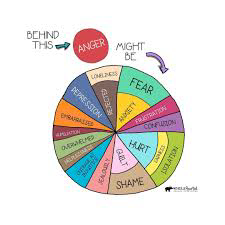
Let’s be real—emotions can hit hard. One minute you’re fine, the next you’re furious, sobbing, or feeling like you’re going to explode. It happens to all of use for no apparent reason.  You’re human. Feeling big emotions is part of just being alive.  You’re not too much, and you’re not alone. The trick isn’t to avoid emotions—it’s learning how to deal with them without letting them overwhelm you.  The more you practice handling these incredibly strong emotions, the stronger and more grounded you’ll become.  Here’s how to get a handle on those intense feelings:

Name It to Tame It  –  Sounds cheesy, but it works. When you’re stressed and overwhelmed, stop and ask yourself: What exactly am I feeling? Angry? Embarrassed? Jealous? Anxious? Naming your emotion makes it less scary and more manageable. 

Breathe. Seriously  –  Your brain freaks out and does all kind of unwanted things when you’re emotional, and deep breathing calms it down. Try this: inhale for 4 seconds, hold it for 4, exhale for 6. Do that a few times and you’ll feel the difference.  You can also find other breathing techniques in my blog “Just Breathe”.

Don’t Bottle It Up (But Don’t Explode Either)  –  Shoving your emotions down doesn’t make them go away; it just delays them for being dealt with and gives them a chance to become stronger and more overwhelming.  But letting them explode all over someone else doesn’t help either. Write in a journal, talk to someone you trust, or get creative—draw, make music, move your body.  You can see my blog on journaling for some suggestions on this if you haven’t thought of this earlier.

Find the Story You’re Telling Yourself  –  Sometimes strong emotions come from the story we’re spinning in our heads. These are called cognitive distortions.  Such as 

they ignored me, so they must hate me.” Stop. Ask: Is that actually true? Or am I assuming the worst? Be curious about your thoughts—not an instant judge of yourself and your thoughts.

Take a Timeout  –  It’s okay to walk away. Whether it’s from a heated conversation, a stressful situation, or your own overthinking brain—step back. Give yourself space to cool off and think clearly.  This is another place you can use using breathing techniques to encourage and help your mind calm down.

Emotions Are Temporary  –  Even the strongest emotions don’t last forever.  REMEMBER…emotions usually only last 90 seconds.  Yes, you read correctly…90 SECONDS!  However that is assuming we don’t do anything to intensify them.  No ruminating, no anguishing over them, etc.  I realize that can be almost impossible for us.  You might feel like your world is ending, but it won’t feel that way tomorrow—or even in a few hours. Ride the wave.  

Talk to Someone  –  You don’t have to deal with everything alone. Talking to a friend, a mentor, your support team (professional or personal) isn’t weak—it’s smart. You deserve support.  I will tell you from personal experience that emotions that are shared DO tend to lose their power over us and our mind.

If you find yourself with unbelievably strong emotions and you forget these suggestions…don’t panic!  As long as the emotions still exist you can begin to use any or all of these tools.  Or any tools that are in your toolbox that you are able to remember.  If you can’t find anything in your toolbox and none of the above ideas don’t work for you; reach out to your support team, they may have further suggestions.  No beating yourself up!  This only serves to add more negative emotions to your already overflowing emotions.  Remember, emotions can’t really hurt you physically.  

FINAL THOUGHTS:

I know and believe that those of us who suffer from an ED of any type can beat it.  It is hard work and at times feels impossible; but I am sure it is a goal that is obtainable to all of you out there. KEEP YOUR CHIN UP!  Take baby steps towards your recovery, put one foot in front of the other and know, with a capital K, you CAN do it.  Even if you can’t see it now, the world needs you!
Don’t let a slip turn into a slide

Not one of use who suffer from an eating disorder are able to “get it” immediately.  We all struggle, especially in the beginning.  Remember, recovery IS NOT LINEAR.  It has its ups and downs.  Some days we believe ‘I got this’ and other times we are so overwhelmed and want to throw in the towel.  On those days we feel like ‘I got this’ we feel on top of the world…woo-hoo, finally!  The days that we are overwhelmed are the days we struggle just to keep our head above water.   These are the days we tend to let our meal plan slide.  These are the days that we throw up our hands and say forget this crap.  Those are the days we are most likely to begin to slip.  We all have those days no matter how long we have been in recovery or how far we have come in our journey.  The trick here is DON’T LET THE SLIP TURN INTO A SLIDE.  If we can think about it in a more positive manner, we can prevent this from happening.  

If you are able, reach out to your professional team to get help with this.  Part of their “job” is to help us so the slip doesn’t turn into a slide.  They may have tools to suggest that you can use to help you get back your motivation and courage (yes, it takes courage to beat this disease) and desire to ‘get back on the horse’ so to speak.  They can help you to figure out what you need to change with your thinking so you can stop the slip.  They will help you to not beat yourself up, something we all are way too good at doing.  If you are unable to see what triggered the slip, they are there to help you, guide yourself to the answer, and work through it.

Check to see what tools you may already know and can use to make this process easier.  The tools may be able for help you figure out what triggered the slip.  Use those tools!  Take a look at your motivation and use that to give you the gentle nudge you may need to make today a more beneficial and healthier day.  Journal, get busy, use self-soothing.  Use Check the Facts or Pros & Cons (both DBT tools) to see if you can find other ways to make better decisions when it comes to your meal plan.  Meditation can be a valuable tool; I use the mantra meditation technique.  Being an anorexic, my mantra for this is “I deserve and want to eat”.   You can make your own mantra based on your type of ED.  This is also where I turn to my higher power.  I can get extra strength from him if I ask, then sit quietly and listen.  

If you journal or keep a gratitude journal go back and read your wins or look at your progress list (if you made one).  This can help us to remember that bad days happen, but you are moving forward and making progress even if you aren’t able to see that for yourself.  If you don’t do either of those things, just sit quietly and see if you can find some progress in your recovery, no matter how small you may feel the progress is.  

Each day is a new day, a new beginning, a fresh start.  Each day we get up we can reaffirm our decision to do the best we can.  Yesterday is over, today is all we have.  So let’s begin by not beating ourselves up over a day where we were not able to achieve our meal plan.  We cannot change it; but rather might use yesterday as a history book to see what NOT to do.  If you are not happy with yourself over yesterday and your actions then you have the power to change them today.  By this I do not mean change what you did but to just use your radical acceptance tool and accept.  No judgement, no butt kicking of yourself.  It was what it was.  Remember, YESTERDAY IS OVER.  Make a resolution to do better today.  Then do it! 

FINAL THOUGHTS:

I know and believe that those of us who suffer from an ED of any type can beat it.  It is hard work and at times feels impossible; but I am sure it is a goal that is obtainable to all of you out there.

KEEP YOUR CHIN UP!  Take baby steps towards your recovery, put one foot in front of the other and know, with a capital K, you CAN do it.  Even if you can’t see it now, the world needs you!
How do I get through today?

This blog is going to be longer than most of my blogs.  By the very nature of humans, not even considering our ED, we all have bad days, complete with wondering how it can be gotten through.

Even though I have been working very hard towards recovery, I, like you, have what in my mind are very bad days.  I feel as though it is all I can do just to put one foot in front of another.  I am quite sure that each of us battling this disease have days like this.   No matter how well we may be doing towards our recovery, these days can feel so very overwhelming.  We can feel so lost in our emotions, we can’t even begin to see the light, and may not be able to believe there is a light, much less how to handle these intense feelings and emotions.  If we have been in recovery for any length of time and feel as though we have managed our ED well, we still have days like this.  For me, they seem exceptionally brutal since I felt as though I have dealt with all of this bs.  We may even be afraid to turn to our support system because we have been doing well and we feel as though we will let them down.  We most likely feel as though we have let ourselves down; that “I will never ever recover”, or even “what’s wrong with me, why can’t I ‘get’ this”?   Old thinking is hard to let go of, especially when we are having a bad day.  Those old thoughts seem to pop up when we least expect them.  Those thoughts helped us in a way that once upon a time we believed served and protected us in some way.  I wish I had a magic wand to make all of these feelings and emotions just disappear; but it doesn’t work that way, and we all know this. The fear can be so severe that we just can’t think of what to do to help ourselves.  

So what do we do on days like this?   First and foremost, DON’T BEAT YOURSELF UP!  I understand that this is much more difficult than it sounds. Sometimes hearing this from someone is enough, and sometimes we can’t ’hear’ those words and we continue to still berate ourselves, feeling like a miserable failure.  I, just like the rest of you, at times, struggle with this.   At times like this, my first go-to step is to reach out to my professional support.  These persons will not be judgmental but rather understanding of our fears.  At times, they can give you a way to channel your thinking into another thought that you are able to use to stop beating yourself up.  You are not a terrible person but just a person who is having a bad day.

When the thoughts become dangerous is when we are not able to sit with our feelings and are contemplating an old behavior that leads to self-harm of one form or another. At this time, I cannot stress enough that this is when it is imperative; that is, you ABSOLUTELY NEED TO REACH OUT to your professional team.  This may also be very difficult since many of us feel as though we are ‘a burden’ and that we are a phony because we have been doing well.  Those are feelings that are a cognitive distortion.  We are not a burden!  Our professional team, especially those who have experience in treating ED, are well aware that there are going to be those days, thoughts, and feelings.  They will be able to help you process the feelings you may be having before the slip turns into a slide.  

Let’s look at the words ‘never’ or ‘ever’.  Let’s challenge them because in reality, we know they are NOT true and are just cognitive distortions.  The very word ‘never’ or ‘ever’ means for the rest of your life.  Are you quite sure that you will never, ever recover?  Do you really believe this is true?  Can you allow yourself to believe that this feeling is only temporary and that possibly tomorrow or sometime in the near future, you will be able to pick yourself back up and get back on the horse?  We have all been told repeatedly, and we might want to try to remember that RECOVERY IS NOT LINEAR.  If this is a hard concept for us to grasp at this time, after all, most of us are perfectionists, and we detest feelings that cause us to think we have failed…know you have not failed…failure would be to give up totally and to completely stop trying.  If you are reading this blog, know that I believe you haven’t given up.  

Understand that everyone, including me, has days that we want to throw in the towel.  When I was in treatment at the residential facility, I learned that all people have bad days.  The trick here is to remember that.  This is something that we don’t always realize.  But it is really, really true.  We just do not see it.  All humans have days that they are not feeling 100%, no matter how ‘put together’ they seem to be.  No bad days mean you are a robot without emotions, feelings, or thoughts that are unpleasant!  Sitting with these fears is what you might try.  I know they feel as though they will never go away, but they will.  Believe it or not, if we “don’t feed our emotions,” they usually disappear in 90 seconds.  It seems impossible to believe that, but the trick here and the key takeaway is “don’t feed the emotions.”

These days are the days when I have to take it back to the beginning!  I force myself to do the very small things that I did at the very start of my recovery journey that helped me out.  I use the small things since big things feel impossible.  I am here to tell you that even doing this can feel so very hard.  My small things are focused around self-care.  Brush your hair, wash your face, brush your teeth, or just make your bed, if those are things you struggled with at the beginning of your journey.  Then give yourself credit for being able to do this.  “ I did it” goes a long way to letting your brain know you are NOT a failure, that you are making progress in spite of your negative emotions.

If you keep a progress list, read it again to remind yourself that you have made progress.  If you keep a gratitude journal or any type of writing and keep track of your daily wins, reread them.  Works the same way.  

Yoga/Tai Chi or gentle stretching helps to reset your vagus nerve in your brain.  The vagus nerve is one of the most important nerves in your body. It’s the longest cranial nerve and plays a huge role in the parasympathetic nervous system, which controls rest, digestion, and relaxation. When we are upset, there are physical changes our mind and brain go through.  The vagus nerve supports breathing  since our breathing tends to become ‘goofy’. It does this by affecting the muscles involved in breathing, helping regulate the diaphragm.  This is the area of our mind that connects the gut and brain.  The vagus nerve is a key part of the gut-brain process, influencing mood, mental health, and even conditions like anxiety and depression.  To me, the most important (though they are all important reasons) reason to resetting the vagus nerve is because it triggers the relaxation response.  Stimulating the vagus nerve (through deep breathing, cold exposure, or meditation) can promote relaxation and reduce stress.  In short, it’s like the body’s superhighway for relaxation and balance—without it, we’d be stuck in a constant state of stress.

The idea of meditation (see the blog on meditation) feels at times impossible, especially when we are in distress. Try it! If you cannot concentrate on something, a pleasant event for you or a mantra, don’t panic.  When you catch your mind drifting back to your distress, just gently and non-judgmentally, bring it back.  Try this for whatever time you are able.  Start with the goal of a small amount of time, even as small as one minute.  Extend this time if and when you are able.  

Other ideas, tips, and tricks are to use a breathing technique of your choice.  You can also use distraction techniques where you do something, anything positive that takes your mind (even if it is a very short time) off of your negative thoughts.  When they return, and they probably will if you are having a bad day, repeat any of these techniques over and over again.  If you have access to some place that you consider nature, go there (if possible) and use one of the ideas listed above.  Listen to POSITIVE, calming music is another way to help yourself.  Maybe even try a new type of music that is calming, such as classical, close your eyes as let your mind find pictures that go with whatever you imagine or just sit quietly and ‘feel’ the music. Maybe songs that you liked when you were younger and in a better place can be helpful.  Journal or write out your emotions, thoughts, feelings, and fears.  Sometimes just getting them out in any form can be beneficial in lessening them.  You don’t have to be an able to do these things perfectly!

Give yourself credit for doing any of the above techniques or any of the techniques that are in your toolbox.  Remember, this tells your brain you are making progress, even if it is small, sometimes even tiny ways. 

FINAL THOUGHTS:

I know and believe that those of us who suffer from an ED of any type can beat it.  It is hard work and at times feels impossible; but I am sure it is a goal that is obtainable to all of you out there.

KEEP YOUR CHIN UP!  Take baby steps towards your recovery, put one foot in front of the other, and know, with a capital K, you CAN do it.  Even if you can’t see it now, the world needs you!

Yoga/Tai Chi

Doing Yoga or Tai Chi can be highly beneficial in eating disorder recovery because they promote mindfulness, body awareness, and stress reduction without focusing on weight or appearance.  Both practices encourage present-moment awareness, helping individuals reconnect with their bodies in a non-judgmental way.  They can reduce dissociation (feeling disconnected from the body), which is common in eating disorders. Yoga and Tai Chi can help to reduce stress and anxiety by activating the parasympathetic nervous system, promoting relaxation and reducing stress-related eating disorder triggers.  They also lower cortisol levels (the stress hormone), which can help regulate appetite.  Many people with eating disorders struggle with compulsive exercise. Yoga and Tai Chi offer gentle, intuitive movement rather than intense, calorie-driven workouts. These practices focus on how the body feels rather than how it looks, fostering self-compassion.  Both disciplines teach breathing techniques and meditative focus, helping individuals cope with urges, anxiety, and emotional distress.  Practicing self-compassion through movement can counter negative self-talk and perfectionism often associated with eating disorders.  The gentle movements can improve digestion and circulation, which may be disrupted by eating disorders.  Certain yoga poses (like twists and forward bends) can help with bloating and discomfort from reintroducing foods into recovery.  Attending yoga or Tai Chi classes (especially trauma-informed ones) can provide social support and a sense of belonging without a focus on appearance or fitness levels.  Classes in your area can be found by googling yoga (or tai chi) classes near m e.  Those of us who are not in a financial position to pay for classes can find guided lessons on You Tube, including all levels.  I would suggest you check out the you tube videos before you decide to sign up for an actual class, if this is something  you are interested in.  Trying it out via youtube videos may save you from spending money on a class that you find out is not for you.

FINAL THOUGHTS:

I know and believe that those of us who suffer from an ED of any type can beat it.  It is hard work and at times feels impossible; but I am sure it is a goal that is obtainable to all of you out there.

KEEP YOUR CHIN UP!  Take baby steps towards your recovery, put one foot in front of the other and know, with a capital K, you CAN do it.  Even if you can’t see it now, the world needs you!
Just Breathe

Breathing techniques are powerful tools for reducing stress, calming the mind, and improving overall well-being.  By focusing on your breath, you can bring your body and mind into a state of relaxation.  There are several breathing techniques that you can use.  Choose the one that is best suited for you.  All of these techniques require practice, practice, practice!  Practicing a technique should be done while you are calm.  This allows your brain to go to the breathing style and come to the front of your brain quicker when you are stressed and/or anxious.  I do my practicing during tv commercials, after all what else do you have to do when watching the incessant commercials.  I find that combining a mantra while breathing in and a separate mantra when breathing out has become very helpful to me.  Such as breathe in and say to yourself “I breathe in calm”, while breathing out I repeat “I breathe out fear”.  You may want to find your own mantra(s) that speak to you.  Practicing this way, especially when in a calm state, helps to not only calm ourselves but to rewire our brains with positive beliefs.  All types of breathing techniques begin with sitting or lying down in a comfortable position.  After that each technique is different with different steps.

Diaphragmatic breathing, also known as abdominal  breathing, involves breathing deeply into your diaphragm rather than shallowly into your chest.  Place one hand on your chest and the other on your abdomen.  Inhale deeply through your nose, allowing your abdomen to rise while your chest remains relatively still then exhale slowly through your mouth, feeling your abdomen fall.  That’s it!  Repeat for 5-10 minutes.

The 4-7-8 breathing is a type of pranayama, or focused breathing, that uses controlled breath to improve physical and mental health.  This technique was developed to bring a person’s nervous system out of “flight or fight” response.  4-7- 8 breath work stimulates the vagus nerve, which engages the body’s relaxation response, and can positively impact cardiovascular, respiratory and gastrointestinal systems.  Inhale quietly through your nose for a count of 4, hold your breath for a count of 7 then exhale completely through your mouth for a count of 8, making a whooshing sound.  Repeat the cycle 4 times.

Box breathing, also known as four-square breathing, is a simple and effective technique.  Inhale slowly through your nose for a count of 4, hold your breath for a count of 4, exhale slowly through your mouth for a count of 4 then hold your breath for another count of 4.  Repeat for 4-5 minutes.

Alternate nostril breathing, or Nadi Shodhana, helps balance the mind and body.  Close your right nostril with any finger that is comfortable.  inhale deeply through your left nostril, then exhale through your left nostril. Release your right nostril after exhaling. Next close your left nostril with any finger.  Inhale deeply through your right nostril then exhale through that nostril.  Repeat for 5-10 cycles.

FINAL THOUGHTS:

I know and believe that those of us who suffer from an ED of any type can beat it.  It is hard work and at times feels impossible; but I am sure it is a goal that is obtainable to all of you out there.

KEEP YOUR CHIN UP!  Take baby steps towards your recovery, put one foot in front of the other and know, with a capital K, you CAN do it.  Even if you can’t see it now, the world needs you!

Meditation

Meditation is a practice where you focus your mind to reach a state of calm, clarity, and emotional balance.  Meditation has been used to help create mental well-being, reduce stress, and enhance self-awareness for thousands of years dating all the way back to 5000 BCE.  This is a tool where practice, practice, practice helps to make it more effective.  Mediation is not a quick fix.  This practice will NOT produce instant lasting results in the beginning.  It is a well established fact that it takes about 21 days for our minds to actually believe what we are trying to teach it. Remember, practice makes everything work better. So practice, practice, practice!

Using meditation is a powerful tool for ED recovery because it helps cultivate mindfulness, emotional regulation, and a healthier relationship with food and the body.  Meditation helps individuals become more present in the moment, making it easier to recognize hunger and fullness cues rather than acting on automatic, disordered behaviors.  It allows space to observe thoughts without judgment, reducing negative self-talk and body dissatisfaction.  Eating disorders are often fueled by stress, anxiety, and perfectionism. Meditation lowers cortisol levels, promoting a sense of calm and control.  It can help prevent stress-induced urges to binge, restrict, or engage in other disordered behaviors.  Meditation strengthens the ability to sit with uncomfortable emotions rather than numbing them through food-related behaviors.  It fosters self-compassion, helping to counter feelings of guilt or shame after eating.  Mindful meditation encourages intuitive eating by improving awareness of physical and emotional hunger.  It helps separate true hunger from emotional cravings, reducing impulsive eating behaviors.  By strengthening impulse control, meditation can help lessen the urges to binge, purge, or overexercise.  It creates a pause between thought and action, allowing for healthier choices.  Many eating disorders leave us with severe low self-esteem and body dissatisfaction. Meditation fosters gratitude, acceptance, and self-love.  Practices like loving-kindness meditation help redirect harsh self-judgment toward compassion.  

Meditation is not nearly as difficult as you might think.  Though it is a technique that needs practice.  You can practice it anywhere you can find a quiet place to relax.  There is no time limit on how long you need to meditate.  If you only have 5 minutes or 30 minutes, you can do it.  Start small.  As you get more comfortable and experienced you can gradually increase the time you meditate.  Try not to spend time wondering if the time you have set for yourself to meditate is soon to be up.

Begin by finding a peaceful and quiet environment where you won’t be disturbed.  A quiet room, a corner in your home, or even a park is all you need.  If practicing this in your own home you may want to set up a calm, clutter-free corner for meditation. Having an actual visual item can help you to focus.  I love grooming horses because doing that gives me a sense of deep inner peace, so I have a horse statue I can focus on.  I find that soft music with no vocals helps me to get into the mind space needed.  Sit in a comfortable position. You can sit cross-legged on the floor/ground, on a cushion, or in a chair with your feet flat on the ground. If you are out in nature, sitting against a tree will work. Stay flexible, if sitting still feels challenging, try walking meditation or mindful breathing while doing daily tasks Keep your back straight but relaxed; this may take some practice to relax.  If possible, try to meditate at the same time each day (like after waking up or before bed) to build it into your routine.  This is not a requirement, but rather to help you to create a daily ‘go-to’ routine.

Next close your eyes.  This helps reduce distractions and increase your attention towards relaxing. Focus on your breath.  Breathe normally, naturally and pay attention to your breath.  Notice your inhale and exhale. Feel the sensation of air entering and leaving your nose  or how your chest and belly rise and fall.  If it is possible, try to “belly breath” which is a technique where you breath deeply and are able to fill your belly,  not just your lungs with air.  If you can’t do belly reaching don’t worry, it’s okay.

It’s natural for distracting thoughts to arise. Instead of fighting them, gently acknowledge them and bring your focus back to your breath.  You may have to do this repeatedly especially when just beginning to practice meditation.  Don’t beat yourself up if you find you need to do this a lot.  That is so very normal.  Meditation takes practice, so don’t be discouraged.

When you are done, slowly open your eyes.  Take time to notice how you feel before moving on with your day.  If it feels good, you can wiggle your hands, feet, arms or legs.

Some of the best meditation practices for eating  disorder recovery are:

Mindfulness Meditation:  This form of meditation focuses on the present moment, body sensations, and breath.

Body Scan Meditation – Helps reconnect with the body in a neutral, non-judgmental way.

Loving-Kindness Meditation – Encourages self-compassion and positive affirmations.

Guided Meditations for Eating Disorders – Many apps and YouTube videos offer recovery-focused meditations.

Mantra Meditation:  This method uses silently repeating a word, phrase, or sound to focus the mind.  For me, who lived in consistent state of fear, the phrase “I am safe” is a phrase I found that helped lower my constant fear level from a 5 (on a scale of 1 – 5) down to a 1.  I have since added other mantras to my meditation while still incorporating my original “I am safe” into my meditation occasionally throughout my mantras.

These apps offer guided meditations, courses, and timers to help you stay on track.

Headspace – Great for beginners with guided meditations, courses, and sleep aids.

Calm – Offers guided sessions, breathing exercises, and relaxing soundscapes.  This is the app I use on a regular basis.  It has both guided and unguided sessions with or without music tracks and many different time lengths to chose from.

Insight Timer – FREE and extensive, with thousands of guided meditations and music tracks.

Ten Percent Happier – Focuses on mindfulness and is great for skeptics.

Smiling Mind – Offers programs tailored for different age groups and stress levels.

Simple Habit – Ideal for busy people, with meditations as short as five minutes.

Other resources you may find helpful to learn or to practice meditation would be:

YouTube: Channels like The Honest Guys or Michael Sealey offer free guided meditations.

Podcasts: Check out podcasts like The Daily Meditation Podcast or Meditative Story.

Books:

The Miracle of Mindfulness by Thich Nhat Hanh

10% Happier by Dan Harris

Wherever You Go, There You Are by Jon Kabat-Zinn (my dietician recommended this to me)

FINAL THOUGHTS:

I know and believe that those of us who suffer from an ED of any type can beat it.  It is hard work and at times feels impossible; but I am sure it is a goal that is obtainable to all of you out there.

KEEP YOUR CHIN UP!  Take baby steps towards your recovery, put one foot in front of the other and know, with a capital K, you CAN do it.  Even if you can’t see it now, the world needs you!

I know I am making progress because…

Keeping track of the progress we have made is imperative to the success of our recovery.  We need to be able to recognize we are progressing, no matter how small the progress is.  Some of our progress will show up under the Today’s Wins if you are keeping a gratitude journal.  No matter whether you keep a gratitude journal or you don’t, having our progress in black and white is a great reminder of how far we have come.  

My ‘I am making progress because’ list is something I add to whenever I feel the need to remind myself of the progress of my recovery.  Another benefit to keeping track is that you can give it to your professional support team easily.  This lets them see what you are making progress in.  I myself, put each time I add to it a different color so I can see the growth.  

I have put out a sample of my progress report to myself.  Several templates for this type of list are out under the templates blog section.  You can either print them (and there are several different templates) out there, or just use them to design your own.  You don’t have to use a “pretty” page; it can just be written done in a spiral notebook.  It is up to you.  

FINAL THOUGHTS:

I know and believe that those of us who suffer from an ED of any type can beat it.  It is hard work and at times feels impossible; but I am sure it is a goal that is obtainable to all of you out there.

KEEP Y0UR CHIN UP!  Take baby steps towards your recovery, put one foot in front of the other and know, with a capital K, you CAN do it.  Even if you can’t see it now, the world needs you!