This is a blog that strives to give those of us who suffer from eating disorders various tools and tips to help us in our recovery journey. NOTE: Everything posted on this blog are MY thoughts and experiences, and should not replace professional advice. You should consult professionals who are experienced in the treatment of eating disorders.
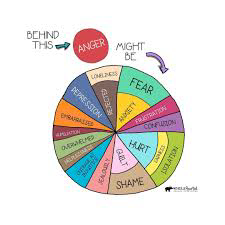
Curiosity can be a good thing for us if used properly. My dietician is always saying to me, “can we be curious on where that thought/emotion is coming from”? For me, that aspect of self questioning can be very painful at times. It can lead me to areas of thought or emotions that I don’t want to feel or believe I am not ready for.
For example: Whenever I am feeling fear, I try to be curious about it now. I ask myself these questions:
What is causing this fear?
What exactly am I afraid of?
Is it the emotions I am feeling?
Is it emotions I MIGHT feel?
Is it the intensity of the emotion(s)?
Is it the actual situation I am in?
Is there a valid reason for this fear?
Is it the emotions that go with a memory?
Is it based on a specific trigger?
Is this fear based on a cognitive distortion?
What was my role in whatever situation the thoughts are coming from?
Based on the answers I have given to these questions I can try to use a tool from my toolbox to calm and lessen the fear.
Deep belly breathing
Check the facts
Sit with the emotions
Repeating:
“I am safe “
“ Not everything is my fault”
“I cannot control other people, places and things”
“False Evidence Appears Real”
“I am enough “
Have a conversation with my fear
So let’s be curious together. Ask yourself some questions trying to figure out exactly what it is that is upsetting you so much. Am I stressed, sad, angry, feel invalidated, what is that I feel? If I feel angry, could it be that my anger is a cover up for other emotions I don’t know how to deal with? Is it a trigger that has me flashing back to something that is physical or emotionally painful? There are a myriad of questions you can ask yourself to get to the bottom of this emotion/feeling/thought. You have to figure out how to question your mind so that you can get some honest and real answers to your questions.
Once this process has been completed as far as you can go ask yourself what tools do I have in my ‘toolbox’ to help me lessen or expel these thoughts/emotions/feelings. I have listed a few of the tools I have and do,regularly use. Some of my tools I use may not be what you need to,do,at that moment. So keep trying to find the tool or combination of tools that work for you. If you can’t find any tool that works just sit with emotions until you can ask someone who may be able to guide you to a tool that is useful to you.
Remember no emotion ever killed anyone – it is the reaction to the emotion that can get us into trouble. Emotions and thoughts do not have to paralyze us. We can use them to help us grow and strengthen our recovery. I know you can do it. Keep on keeping on!
FINAL THOUGHTS:
I know and believe that those of us who suffer from an ED of any type can beat it. It is hard work and at times feels impossible; but I am sure it is a goal that is obtainable to all of you out there.
KEEP YOUR CHIN UP! Take baby steps towards your recovery, put one foot in front of the other and know, with a capital K, you CAN do it. Even if you can’t see it now, the world needs you!
We have all felt the overwhelming emotions that suddenly or even maybe slowly appear. Of course these emotions are always negative; for if they were positive they wouldn’t be what we call overwhelming and/or we might not even notice them.
Many of these emotions can be traced back to something that greatly triggers us. If you are like me most of the overwhelming emotions and triggers come from my childhood and the way I was treated or the way I perceived what was going on around with, around or to me. But sometimes they come for other reasons; possibly the friends you have or the relationship you are in. Relationships, either a friend(s) or even significant other(s) can be abusive if there is a pattern of negating or invalidating your feelings or working hard to convince you that you are wrong. These emotions can be range (just to name a few) from:
Anger
Frustration
Guilt
Shame
“I am not enough”
Disgust or humiliation at someone else’s words or behavior at my own words or behavior
Unheard
Invalidated
So what can we do with them, how do we combat them and lower the intensity?
We can start by acknowledging them; because yes, you are NOT being over dramatic, too sensitive, too dumb to understand the results of our responses, or any of the other excuses that others throw around to invalidate our feelings, thoughts and/or our emotions.
Hear what these emotions are trying to tell us…if we can listen, hear and possibly realize where they are coming from.
I use curiosity as another method to bring down the level of the overwhelming emotions. I start by:
asking myself exactly what emotions am I feeling. The very thought of this step can be very difficult to do. We are so used to just feeling them and accepting them as “who we are” that it can be hard to sort out exactly what we are feeling. All we know is that the emotions are so incredibly strong and confusing.
Be curious about why am I feeling this emotion. What started this process? Is this based on a trigger? If so, what is the actual trigger? Where does this trigger come from? Especially if it is from a past experience can you see that the experience is in the past?
If this emotion you are feeling is that intense, I use:
Distraction to hopefully give my mind something else that is positive to focus on.
Mindfulness to again refocus my mind. Repeating to myself that “I am in the present here and now”. “I am letting go of my past”.
Using mantras to help my mind and subconscious to begin to believe I am letting go of anything I need to such as guilt, shame, self-criticism.
I also use deep breathing techniques. By using these it allows your mind to focus on something else besides your emotions. I also use my mantras at the same time.
Talking to my mental health professional about these emotions. I find that talking about them helps lessen their intensity as well as getting some positive feedback on better ways to view the situation that is causing these emotions. They can also be helpful in giving you ideas on how to lessen their intensity.
Just like with everything and every tool we use it does require practice so that when you need that tool it is there for you to use with little or no thought process on your part. The mantras and the deep breathing I find are easy to do while you are watching tv and a commercial comes on. That is when I practice this stuff.
I also use a ‘new response’ that my therapist has shown me. Realizing the situation is not really under your control and that you really didn’t have anything to do with the situation or the trigger is a huge relief. A new response could be something as simple as “this was not really about me or who I am”.
We ARE NOT the overwhelming emotions we are feeling at that time. They are just a reaction to the words our mind is feeding us – so to speak. It is what and how we deal with them that starts to define us.
FINAL THOUGHTS:
I know and believe that those of us who suffer from an ED of any type can beat it. It is hard work and at times feels impossible; but I am sure it is a goal that is obtainable to all of you out there.
KEEP YOUR CHIN UP! Take baby steps towards your recovery, put one foot in front of the other and know, with a capital K, you CAN do it. Even if you can’t see it now, the world needs you!
I USE THE WORD THERAPIST – BUT THIS COULD MEAN THERAPIST, PSYCHOLOGIST, PSYCHIATRIST, DIETITIAN OR ANY MENTAL HEALTH PROFESSIONAL THAT IS PART OF MENTAL RECOVERY OF YOUR SUPPORT TEAM.
There finally comes a time in our recovery journey where it is time to begin to phase out our therapist. OH NO; NOW WHAT? If you are like me, even the thought of do this sending almost instant panic and fear into my body and mind.
This reaction is actually very common and very human. When your therapist has been with you through vulnerable, difficult, and transformative parts of your life, the relationship becomes meaningful. Letting go, even because you’re doing better, can still stir feelings of abandonment, grief, or uncertainty. This doesn’t mean you’re regressing. It generally means that the relationship mattered to you. Here are some important ways to navigate this transition:
1. Recognize that this is a form of grief; not all grief is a negative thing.
Even positive endings can bring grief. Your nervous system learned: “This person helps me stay okay.” Letting go can feel like losing your stabilizing anchor, even if you’re stronger now. This is absolutely not weakness—it’s attachment, which is a necessary part of healing. Your therapist has meant:
• Safety
• Witnessing
• Consistency
• Support during fragile moments
2. Reframe the ending as a graduation, not abandonment
Abandonment is when someone leaves without regard for your wellbeing. You’re not losing what they gave you. You carry it, all the positive and productive tools and everything you have learned inside of you now.
This situation is different. This is:
• A transition
• Evidence of growth
• A sign you’ve internalized what you needed
Many people find comfort in this idea: the therapist’s words have become a voice inside your mind, an “internal voice”, so to speak, that you can still access and recall when needed. You may notice yourself thinking “What would they say right now?” That’s a sign the work took root.
3. Consider creating intentional closure
Closure helps your brain complete the emotional cycle. Closure reduces the sense of sudden separation.
Some helpful options:
• Write them a letter (even if you don’t send it)
• Express gratitude in your final sessions
• Talk openly about your feelings of loss
• Ask if you can schedule a future “check-in” session if needed
4. Expect some emotional wobble—it’s normal
Even when you’re ready, you may feel:
• Vulnerable at times
• Unsure without the regular support
• A temporary increase in emotional sensitivity
This doesn’t mean you’re not ready. It’s your nervous system adjusting to standing on its own. Think of it like physical therapy—you can walk on your own now, but the first steps still feel unfamiliar.
5. You’re not losing the relationship completely
Many therapists offer:
• Occasional check-ins
• The option to return if needed
• Or simply the knowledge that the door isn’t locked
Just knowing this can ease abandonment feelings.
6. You may be experiencing “earned security”
This is actually one of the most beautiful outcomes of therapy. You learned that:
• Someone could be present
• Someone could help you regulate
• Someone could care consistently
And now your system is learning: I can be that person for myself too.
As researcher Brené Brown often emphasizes, healing relationships teach us that we are worthy of care—and eventually, we learn to offer that same care inward.
7. A gentle mindset shift that helps many people
Your therapist didn’t just support you—they helped you become someone who can support yourself.
Instead of thinking: I’m losing my therapist.”
Try thinking: “I’m carrying forward what they helped me build.”
8. Especially important given your recovery journey
Because you’ve worked so hard in recovery, your therapist may have been deeply tied to:
• Safety
• Survival
• Identity rebuilding
So letting go can feel like letting go of a huge part of your life. That part doesn’t disappear. It becomes part of you and your great strength.
⸻——————
Gradual transitions often feel much safer emotionally. Here’s how to make a gradual taper emotionally steadier:
1. Name the Attachment Out Loud
If you haven’t already, tell your therapist directly:
• “Part of me feels scared about losing this.”
• “I notice abandonment feelings coming up.”
• “I’m proud of my progress, but I’m also sad.”
Processing the ending with them is actually part of the final healing layer.
2. Stretch the Space Intentionally
When sessions move from weekly to biweekly or monthly, treat the in-between time as practice rather than absence.
You might try:
• Keeping a short “What I’d Bring to Session” note in your phone.
• Asking yourself, “What would she/he ask me right now?”
• Writing brief reflections after tough moments.
This helps you internalize the therapist’s voice.
3. Create a “Bridge Object”
Some people find it helpful to:
• Keep a phrase their therapist often said..
• Write down coping tools learned in therapy.
• Keep one meaningful takeaway from your work together.
It becomes symbolic continuity instead of loss.
4. Expect a Little Regression Anxiety
When your contact with your therapist decreases, you might notice:
• Increased sensitivity
• A small spike in self-doubt
• Worry about slipping
This is common during tapering. It’s your nervous system recalibrating — not proof you’re not ready. The key question isn’t: “Am I anxious?” It’s: “Am I using what I’ve learned?”
5. Consider a Future “Safety Net” Plan
Ask about:
• An agreed-upon check-in 3–6 months out.
• The option to return if needed.
• What signs would indicate coming back.
Having a re-entry plan reduces abandonment fear dramatically.
6. Reframe What This Stage Means
You’re not being left. You’re being trusted. This stage isn’t:
• “I don’t need support.”
It’s:
• “I’m practicing independence with support still available.”
When you imagine the therapy fully ending someday, does it feel more like:
• Sadness?
• Fear?
• Anger?
• Or something else?
There’s usually one dominant feeling underneath, and naming it makes it much less powerful.
FINAL THOUGHTS:
I know and believe that those of us who suffer from an ED of any type can beat it. It is hard work and at times feels impossible; but I am sure it is a goal that is obtainable to all of you out there.
KEEP YOUR CHIN UP! Take baby steps towards your recovery, put one foot in front of the other and know, with a capital K, you CAN do it. Even if you can’t see it now, the world needs you!
SHAME…an emotion we tend to feel so deeply. It comes from things that others can’t seem to understand. So how do I know if I am feeling shame? Or could it be something else?
The definition of shame is: a painful feeling of humiliation or distress caused by the consciousness of wrong or foolish behavior. This definition of shame comes from an actual dictionary. Please note the word consciousness which means the DELIBERATE act on our part of exploiting or saying something that we intend to either hurt someone or getting them to do whatever we want at the time. This is something we all have done at some point in our lives.
That heavy, sticky shame feeling is so common—and it’s not a personal flaw. Shame is usually a learned response, not a truth about who you are. The good news: it can be softened. So how do I cope with and begin to lessen my feelings of shame?
Here are ways that actually help, not just what we have all heard over and over again of “think positive”.
1. Name it gently
When shame shows up, try: “This is shame, NOT A FACT.”
That tiny separation matters. Shame thrives when it feels unquestioned and absolute.
2. Get curious instead of critical
Ask yourself (kindly): • Where did I learn this was shameful?
• Whose voice does this sound like?
Often the answer isn’t you—it’s old rules, culture, family, or survival strategies that once made sense.
3. Practice self-compassion like a skill
This can feel awkward at first, especially if you’re used to being hard on yourself. Try this: • Place a hand on your chest
• Say (out loud if you can): “I’m having a hard moment. I’m still worthy of care.”
Neuroscience backs this up—physical warmth + kind language actually calms the nervous system. Also remember…words that we tell ourselves even just in our mind are so very powerful.
4. Share selectively
Shame weakens when it’s spoken to the right people. You don’t need to tell everyone—just one safe person, therapist, or support space. Shame loves secrecy; it shrinks with connection. I have found that once I share with one or more of my support team, the feeling starts to lessen if not go away.
5. Separate behavior from identity
Instead of: “I’m bad / broken / weak”. Try: “I did something I’m not proud of” or “I’m struggling right now”
You are not the problem—you’re a person having a problem.
6. Watch for “false responsibility”
Shame often says you should’ve known better, done better, healed faster. Ask: “Was I truly in control here—or was I coping the best I could with what I had?”
Most of the time, it’s the latter.
7. Let it pass through your body
Shame lives physically—tight chest, heat, urge to hide. Gentle movement, slow breathing, or even shaking out your arms can help release it instead of looping it in your head.
You’re not failing for feeling this way. You’re human—and learning how to be kinder to yourself is brave work 💛
FINAL THOUGHTS:
I know and believe that those of us who suffer from an ED of any type can beat it. It is hard work and at times feels impossible; but I am sure it is a goal that is obtainable to all of you out there.
KEEP YOUR CHIN UP! Take baby steps towards your recovery, put one foot in front of the other and know, with a capital K, you CAN do it. Even if you can’t see it now, the world needs you!
For many of us, setting goals can be not only difficult, but extremely painful as well. We are uncertain of where to even begin since for during our ED the only thing that occupied our brains and minds was our ED and the rules it made for us. Thousands of thoughts fly through our minds at a speed we can barely manage. This task usually seems overwhelming and very confusing…what do I work on first…what happens if I can’t reach my goals…what happens next if I DO reach my goals…how do I even set a goal…what is the most important item I need to reach and strive for first…and on and on. This is where your support team can and hopefully will help. Lean on them.
First, keep your goals reachable and simple especially at the beginning of your recovery process. Using the SMART goal setting process has been a huge help to me when doing this even as I have gotten better. The SMART process is straight forward and easy to use. It helps to make your goals small, especially at the beginning of your journey. Remember baby steps forward helps you to not become overwhelmed (something we all struggle with). Each goal should be set up as:
Specific
Measurable
Attainable
Realistic
Timely
Write your goal out, using the above criteria. Writing the goal out with the SMART system helps to cement it into your mind. Remember, almost all goals can be broken out into much smaller goals. If the goal you have set seems overwhelming, break it down into manageable parts. As you reach each baby step of the entire goal, GIVE YOURSELF CREDIT and move on to the next step. Our friends and family and professional support team can help a great deal by helping you to notice your progress and add encouragement when you are struggling. If your goal is something you set up to do on a regular basis and you forget, DO NOT BEAT YOURSELF UP. But rather, just try again. Failing to achieve a goal does NOT make you a failure. You are strong and tough so just make a decision to try again. You will make it and will reach the goal with practice.
One of my first goals was to practice self-care. For most people with an ED this is an area we have sorely neglected. Not because we were not wanting to do it; but rather because we didn’t think we were worth it or simply did not have the energy to do it. It was also to me, the easiest goal to start with. If you choose this as your first goal, I would suggest you begin by making your bed every day. If you forget to do this, DO NOT beat yourself up. Starting a new goal may be something you are not used to. Simply get up and go make it when you realize you forgot.
Some goals you may decide to reach for are:
Self-care such as Make your bed, Brush your hair, Brush your teeth, Shower on a regular basis, Take any medication you are prescribed in the manner they should be taken, Get enough sleep.
Not spending so much time on social media or watching TV (decrease this time slowly day by day)
Catching the nasty ED thoughts – even if it is only catching 1 a day
Volunteer doing something you will enjoy. By volunteering, it gets you out of the house and also allows you to focus on something other than yourself and the ED which has invaded your life.
Share your talents. What are you good at? Project management? Writing? Design? Accounting? Do you know how to sew? Can you teach or tutor in a language? For every skill and ability, there’s likely to be a volunteer organization that could use your talents to support their mission.
Getting out of your residence – even if it to just go outside for 5 minutes. You can increase the time slowly day by day. Places you may choose to go are:
Outside – your own yard or even a park if there is one you have access to. If you like to read take a book with you. This provides a distraction for you which helps decrease your anxiety.
Outside and walk your dog if you have one, increasing the time you spend walking your pet slowly
A coffee shop, staying and drinking your beverage there if you can. If you are unable to stay, just getting out and getting a beverage is a great beginning
If you are a reader, try the library.
Go to a movie theater, if finances are a concern, try a matinee; it is cheaper.
Call a family member or a good friend who understands your struggle and go visit with them or meet them at the park or coffee shop. This allows you to keep the visit within the time limit you are able to handle.
Find an area you are interested in and learn. This may mean learning by reading articles on the internet, going to the library and checking out a book on it (library cards are free), find a class on your interest even if the class is online if you are in a financial position to be able to do so.
Each time you are able to reach a goal you set for yourself helps you to realize you can do it and increases your self-confidence even if you don’t see or feel it at the time.
FINAL THOUGHTS:
I know and believe that those of us who suffer from an ED of any type can beat it. It is hard work and at times feels impossible; but I am sure it is a goal that is obtainable to all of you out there.
KEEP YOUR CHIN UP! Take baby steps towards your recovery, put one foot in front of the other and know, with a capital K, you CAN do it. Even if you can’t see it now, the world needs you!
None of us woke up one morning and said “self, I think today I want to develop an eating disorder”. It does not happen like that as we all know. We all start our disordered eating for different reasons. But the end result is the same, we are all suffering from a disease that started in one form or another as a way to cope with something we were not able or didn’t have the tools to handle. Everyone’s beginnings are similar, but different. Unfortunately the ending is all the same. The fear, shame, self-loathing, depression, isolation and many other unpleasant thoughts, feelings and emotions overwhelm us. Leaving us feeling like we are drowning in despair.
For me, understanding exactly why I began restricting was painful because it meant what I call ‘re-hashing or re-opening’ of the old wounds. Something I was not prepared to go through again. In fact every time I tried to deal with my past my anorexia grew more out of my control. So the old wounds just festered. My ED gave me something to control and focus on while it took over my life and my brain in a way that allowed me to avoid re-opening my past.
Developing an eating disorder can be complex, varied and influenced by many areas of our life, including emotional, psychological, biological, and social elements. Some common influences that can allow this disorder to begin may include:
Emotional and Psychological Factors such as stress, anxiety, depression, low self-esteem, or a need for control can aid in the development of disordered eating patterns. Sometimes food or lack of food becomes a way to cope with overwhelming emotions.
Cultural and Social Pressures of societal beauty standards, media glorification of body image, or pressure from peers and our family can influence how we see perceive our bodies and our relationship with food. When I was growing up a model named Twiggy was the rage. She was a toothpick thin woman and was held up as a standard all women should look like. Today we know that is so not healthy.
Biological Factors like genetics, hormonal imbalances, or brain chemistry can play a role in predisposing us to an eating disorder. We can also be heavily influenced by the example our parents set for us. If we see that our mother doesn’t eat much or binges and/or purges, over exercises especially when she is stressed or for whatever reason, this tells our brain that this is the way to handle stress, anxiety and/or unpleasant emotions. I am not sure if this is a biological factor or falls under family dynamics, so I put it in both categories.
Trauma and Life Experiences like bullying, abuse (of any type), loss of an important person in our lives, a major traumatic event which causes us deep pain or significant life changes can lead to feelings of vulnerability or loss of control, which some of us might try to manage through eating behaviors.
Family Dynamics where growing up in an environment where there’s an emphasis on appearance, dieting, or where emotional needs weren’t fully met can also be a contributing factor. The examples set by our childhood caretakers can also have a large influence on whether we develop disordered eating. If our caretaker uses food in one way or another to cope with their feelings, anxiety or other unpleasant situations, that is a strong example that we learn early on. We learn that is a way to cope. It would not be uncommon for us to develop that sort of coping mechanism ourselves.
Understanding the root causes of an eating disorder is personal and often complex. I believe that we MUST be in a place of good physical and stable mental health before we can begin to tackle this subject. Quite often we also suffer from other forms of mental issues such as depression, PTSD, BPD, severe anxiety or bi-polar just to name a few. Left unknown, unseen (because we are masters at hiding what we don’t want others to see), misdiagnosed or untreated can also greatly increase the chances of an eating disorder making its ugly appearance. These too must be dealt with before dealing with the why question. For without dealing with the underlying mental issues we can not achieve the stable mental health we need to pursue sorting out and dealing with the why of our ED.
I have found that the ED had to be dealt with first and foremost. With the help of my support team, both professional and friends and family, I was able to reach and maintain a healthy weight. Once I had enough mental and physical wellness as well as a ton of tools in my tool box to explore this area, I began to deal with the why I developed my ED. I won’t sit here and say it is not scary and fear filled to reopen old wounds; but it is a necessary part of truly healing, in my opinion.
FINAL THOUGHTS:
I know and believe that those of us who suffer from an ED of any type can beat it. It is hard work and at times feels impossible; but I am sure it is a goal that is obtainable to all of you out there.
KEEP YOUR CHIN UP! Take baby steps towards your recovery, put one foot in front of the other and know, with a capital K, you CAN do it. Even if you can’t see it now, the world needs you.
All of us who suffer from low or non-existent self-esteem tend to wonder and feel like “what’s wrong with me?” are constantly in search for an answer to this age long question. This question can run our minds around in circles. We have all been there. To me this is an ever present question that I desperately sought and still seek an answer to. By believing there is something inherently wrong with us we tend to gravitate towards emotions and thoughts of “I am unworthy of … “; “I don’t deserve …”; or even “I can’t do … because…”, fill in the blank with your own thoughts. We are never able to truly relax and enjoy the life we have at that moment.
Radical acceptance is about fully accepting reality as it is, even when it’s painful or difficult. It means acknowledging the facts of a situation without trying to deny, fight, or change them. This doesn’t mean you approve of the situation or agree with it, it just means you recognize that it’s real. By accepting reality, you can reduce emotional suffering and focus your energy on what you can control, rather than being stuck in frustration or anger over things you can’t change. It’s a concept often used in mindfulness and therapy to help people cope with tough emotions and experiences.
Philosopher and psychologist William James once said, “the first step in overcoming any misfortune is to allow it to be”.
The saying of “It is what it is” is a form of radical acceptance. The situation is just that; and is neither good or bad. ‘“It is what it is” has no judgement attached to it, just the facts of the situation; which is exactly what Radical Acceptance is.
ACCEPTANCE IS NOT:
saying what happened is okay
giving up or giving in.
ACCEPTANCE IS:
acknowledging reality so you can marshal your psychological and emotional resources to move forward.
Learning to accept reality, and then using your skills to be as effective as possible, is the path forward and the way to end suffering.
Practicing radical acceptance involves a few key steps to help you acknowledge reality and reduce emotional suffering. To practice the Radical Acceptance tools you need to notice what you’re resisting. Pay attention to situations where you’re feeling anger, frustration, or denial. Ask yourself, “What am I struggling to accept right now?”. Next comes the acknowledge reality step; clearly recognize the facts of the situation, even if they’re painful. Remind yourself, “This is the way things are, whether I like it or not.” You also need to practice recognizing what you can and can’t control, which is to understand that while you can control your response, you can’t always control circumstances or other people. Another step involves allowing yourself to feel by letting yourself experience the emotions that come with acceptance—whether it’s sadness, disappointment, or grief—without judgment. Lastly we need to challenge unhelpful thoughts. You might want to consider noticing thoughts like “This shouldn’t be happening!” and gently shift them to “It is happening, and I can handle it.”
Some of the tools we can use to help us to practice this technique are mindfulness. Focus your thoughts on staying present. Avoid dwelling on how things could or should be. Ground yourself by paying attention to your breath or surroundings. Practice self-compassion; be kind to yourself. Acceptance can be hard, and it’s okay to struggle with it.
Radical acceptance isn’t a one-time thing. You may need to remind yourself to accept reality over and over, especially in challenging situations. It’s a skill that takes time to develop, but with practice, it can lead to less emotional suffering and greater inner peace.
Spend the next few minutes contemplating the role of acceptance in your life. What are some things you are having a difficult time accepting? Is this something I can control? What skills do you have and can use to accept those things?
FINAL THOUGHTS:
I know and believe that those of us who suffer from an ED of any type can beat it. It is hard work and at times feels impossible; but I am sure it is a goal that is obtainable to all of you out there.
KEEP YOUR CHIN UP! Take baby steps towards your recovery, put one foot in front of the other and know, with a capital K, you CAN do it. Even if you can’t see it now, the world needs you!
Let’s be real—emotions can hit hard. One minute you’re fine, the next you’re furious, sobbing, or feeling like you’re going to explode. It happens to all of use for no apparent reason. You’re human. Feeling big emotions is part of just being alive. You’re not too much, and you’re not alone. The trick isn’t to avoid emotions—it’s learning how to deal with them without letting them overwhelm you. The more you practice handling these incredibly strong emotions, the stronger and more grounded you’ll become. Here’s how to get a handle on those intense feelings:
Name It to Tame It – Sounds cheesy, but it works. When you’re stressed and overwhelmed, stop and ask yourself: What exactly am I feeling? Angry? Embarrassed? Jealous? Anxious? Naming your emotion makes it less scary and more manageable.
Breathe. Seriously – Your brain freaks out and does all kind of unwanted things when you’re emotional, and deep breathing calms it down. Try this: inhale for 4 seconds, hold it for 4, exhale for 6. Do that a few times and you’ll feel the difference. You can also find other breathing techniques in my blog “Just Breathe”.
Don’t Bottle It Up (But Don’t Explode Either) – Shoving your emotions down doesn’t make them go away; it just delays them for being dealt with and gives them a chance to become stronger and more overwhelming. But letting them explode all over someone else doesn’t help either. Write in a journal, talk to someone you trust, or get creative—draw, make music, move your body. You can see my blog on journaling for some suggestions on this if you haven’t thought of this earlier.
Find the Story You’re Telling Yourself – Sometimes strong emotions come from the story we’re spinning in our heads. These are called cognitive distortions. Such as
they ignored me, so they must hate me.” Stop. Ask: Is that actually true? Or am I assuming the worst? Be curious about your thoughts—not an instant judge of yourself and your thoughts.
Take a Timeout – It’s okay to walk away. Whether it’s from a heated conversation, a stressful situation, or your own overthinking brain—step back. Give yourself space to cool off and think clearly. This is another place you can use using breathing techniques to encourage and help your mind calm down.
Emotions Are Temporary – Even the strongest emotions don’t last forever. REMEMBER…emotions usually only last 90 seconds. Yes, you read correctly…90 SECONDS! However that is assuming we don’t do anything to intensify them. No ruminating, no anguishing over them, etc. I realize that can be almost impossible for us. You might feel like your world is ending, but it won’t feel that way tomorrow—or even in a few hours. Ride the wave.
Talk to Someone – You don’t have to deal with everything alone. Talking to a friend, a mentor, your support team (professional or personal) isn’t weak—it’s smart. You deserve support. I will tell you from personal experience that emotions that are shared DO tend to lose their power over us and our mind.
If you find yourself with unbelievably strong emotions and you forget these suggestions…don’t panic! As long as the emotions still exist you can begin to use any or all of these tools. Or any tools that are in your toolbox that you are able to remember. If you can’t find anything in your toolbox and none of the above ideas don’t work for you; reach out to your support team, they may have further suggestions. No beating yourself up! This only serves to add more negative emotions to your already overflowing emotions. Remember, emotions can’t really hurt you physically.
FINAL THOUGHTS:
I know and believe that those of us who suffer from an ED of any type can beat it. It is hard work and at times feels impossible; but I am sure it is a goal that is obtainable to all of you out there. KEEP YOUR CHIN UP! Take baby steps towards your recovery, put one foot in front of the other and know, with a capital K, you CAN do it. Even if you can’t see it now, the world needs you!
Not one of use who suffer from an eating disorder are able to “get it” immediately. We all struggle, especially in the beginning. Remember, recovery IS NOT LINEAR. It has its ups and downs. Some days we believe ‘I got this’ and other times we are so overwhelmed and want to throw in the towel. On those days we feel like ‘I got this’ we feel on top of the world…woo-hoo, finally! The days that we are overwhelmed are the days we struggle just to keep our head above water. These are the days we tend to let our meal plan slide. These are the days that we throw up our hands and say forget this crap. Those are the days we are most likely to begin to slip. We all have those days no matter how long we have been in recovery or how far we have come in our journey. The trick here is DON’T LET THE SLIP TURN INTO A SLIDE. If we can think about it in a more positive manner, we can prevent this from happening.
If you are able, reach out to your professional team to get help with this. Part of their “job” is to help us so the slip doesn’t turn into a slide. They may have tools to suggest that you can use to help you get back your motivation and courage (yes, it takes courage to beat this disease) and desire to ‘get back on the horse’ so to speak. They can help you to figure out what you need to change with your thinking so you can stop the slip. They will help you to not beat yourself up, something we all are way too good at doing. If you are unable to see what triggered the slip, they are there to help you, guide yourself to the answer, and work through it.
Check to see what tools you may already know and can use to make this process easier. The tools may be able for help you figure out what triggered the slip. Use those tools! Take a look at your motivation and use that to give you the gentle nudge you may need to make today a more beneficial and healthier day. Journal, get busy, use self-soothing. Use Check the Facts or Pros & Cons (both DBT tools) to see if you can find other ways to make better decisions when it comes to your meal plan. Meditation can be a valuable tool; I use the mantra meditation technique. Being an anorexic, my mantra for this is “I deserve and want to eat”. You can make your own mantra based on your type of ED. This is also where I turn to my higher power. I can get extra strength from him if I ask, then sit quietly and listen.
If you journal or keep a gratitude journal go back and read your wins or look at your progress list (if you made one). This can help us to remember that bad days happen, but you are moving forward and making progress even if you aren’t able to see that for yourself. If you don’t do either of those things, just sit quietly and see if you can find some progress in your recovery, no matter how small you may feel the progress is.
Each day is a new day, a new beginning, a fresh start. Each day we get up we can reaffirm our decision to do the best we can. Yesterday is over, today is all we have. So let’s begin by not beating ourselves up over a day where we were not able to achieve our meal plan. We cannot change it; but rather might use yesterday as a history book to see what NOT to do. If you are not happy with yourself over yesterday and your actions then you have the power to change them today. By this I do not mean change what you did but to just use your radical acceptance tool and accept. No judgement, no butt kicking of yourself. It was what it was. Remember, YESTERDAY IS OVER. Make a resolution to do better today. Then do it!
FINAL THOUGHTS:
I know and believe that those of us who suffer from an ED of any type can beat it. It is hard work and at times feels impossible; but I am sure it is a goal that is obtainable to all of you out there.
KEEP YOUR CHIN UP! Take baby steps towards your recovery, put one foot in front of the other and know, with a capital K, you CAN do it. Even if you can’t see it now, the world needs you!
Notice I didn’t say ‘Dear ED’. I only use that term as a term of endearment and you, ED, are not endearing. You are so unwanted that there isn’t strong enough words in the world to tell you how unwanted you are.
Once upon a time you were my best and one and only friend. For a long time, I thought you were helping me. You came into my life quietly, offering control when everything felt out of control. You whispered lies that sounded like truths—that being thinner meant being better, safer, more worthy. You convinced me that if I just followed your rules, I’d finally feel enough. And at first, it felt like maybe you were right.
But slowly, you took more than you gave. You turned my thoughts into obsessions, my confidence into fear, my body into a battleground. You made me believe that hunger was strength, that isolation was discipline, that shrinking made me powerful. You made me feel guilty for existing. You stole joy, relationships, spontaneity—everything that made me. You made promises you never intended to keep.
And the truth is—I’m tired. I’m tired of living in fear of food, tired of measuring worth in calories and numbers, tired of the constant war inside my head. I want more than what you offer. I want peace, connection, laughter. I want my life back.
This letter isn’t about pretending you were never there. I know you showed up for a reason. You tried to protect me in a world that sometimes felt too much. But your protection has a price I can’t pay anymore. So here’s the truth…I DON’T NEED YOU.
I’m learning to trust my body again. To listen to hunger not as weakness but as wisdom. I’m learning that healing is messy, but it’s mine. And every step I take away from you is a step toward freedom. YOU DON’T GET TO DEFINE ME!
Goodbye—for now, for good, or however many times I need to say it.
ME
FINAL THOUGHTS:
I know and believe that those of us who suffer from an ED of any type can beat it. It is hard work and at times feels impossible; but I am sure it is a goal that is obtainable to all of you out there.
KEEP YOUR CHIN UP! Take baby steps towards your recovery, put one foot in front of the other and know, with a capital K, you CAN do it. Even if you can’t see it now, the world needs you!