Keep Going

This is a blog that strives to give those of us who suffer from eating disorders various tools and tips to help us in our recovery journey. NOTE: Everything posted on this blog are MY thoughts and experiences, and should not replace professional advice. You should consult professionals who are experienced in the treatment of eating disorders.


If you are like me, you go through our lives not knowing who you really are. We try hard to be everything to everyone. We do everything in our power to “be perfect”. We feel like we have to be all things to everyone. We try with all our might to not let others see what we believe we are or what we actually feel about ourselves. We are so lost in the idea of “who am I”, we have totally lost track of US! We feel as though we are nothing but masks that we can put on and take off depending on the situation. Our masks are some much a part of our lives we don’t even realize most of the time we are wearing them or switching them out. Masks allow us to pretend to be someone we want to be. If your life is unhappy, we usually have the belief that if we just could be what others say we should be we will just be happy. Then we put on our masks to hide who are really are.
I have come to realize that the masks we think we wear aren’t masks, but really are parts of us. Usually they are small parts of us that really exist. After all, how can we wear a mask of something we don’t somehow, somewhere inside ourselves feel. If you put on what you view as a mask of kindness, you may be surprised to find kindness is really there inside of you. The mask of being happy contains the part of us that really strives to be happy, even though we may not think so. The mask of caring can show us that we are really a caring person even if we don’t feel it at that time.
As soon as we are able to understand masks aren’t masks but rather just a part of who we are deep inside we can begin to embrace each part of ourself. We can nurture it and help it to blossom and grow. We begin to believe we are NOT a phony, but rather who we are…a kind, caring, compassionate, loving, nurturing person.
What parts of you are you seeing as a mask? Does these parts of you exist buried somewhere inside of you? How can you bring those parts to the front of our life? This is where, again, your professional team can be of help. Make a list of the “masks” you think you wear. Put a check mark next to each of the items in your list that you know are a real part of you. I think you will be surprised at the results.
FINAL THOUGHTS:
I know and believe that those of us who suffer from an ED of any type can beat it. It is hard work and at times feels impossible; but I am sure it is a goal that is obtainable to all of you out there.
KEEP YOUR CHIN UP! Take baby steps towards your recovery, put one foot in front of the other and know, with a capital K, you CAN do it. Even if you can’t see it now, the world needs you!
I am the type of person who wants to know everything I can about the eating disorder that has consumed my life for over 50 years. Usually, at first, my research was an attempt to prove to myself that I DID NOT have this disease. For most of us, if not all of us, we end proving to ourself that the diagnosis is correct and, yes, we do having ED. At that point, my mind turned to research for that ‘quick fix’. Sound familiar? At some point, we begin to see that there is no such thing as a ‘quick fix’; that we actually have to do some tough and very difficult work. Very frightening for most of us.
These are 4 of the books I would recommend to read for those of us who suffer from any type of eating disorder. I have read them and found them to be helpful – some of which were very helpful, some that were somewhat helpful and some just for knowledge of about our disease. The books I am now most drawn to and find the most helpful are the books that contain knowledge that help me to see how and why my body and mind work ALONG WITH tools I can use to overcome the ED.
If you choose to read or even peruse any of these books, there will be things you can relate to and things you think are pure junk. Take what you need and leave the rest. Understanding that you may not be in a place to believe at that time you are reading them what they have to say is normal. Which is why I will at times refer back to them since as I recover I may be able to be more receptive to the information presented.
For those of you who don’t like to read or struggle with actually reading, many of these books are available on Audible (my personal favorite for audiobooks). You can listen to them when falling asleep or driving somewhere. I would recommend making a mental note of where you left off before you went to sleep and set a timer for when you want to stop listening or may fall asleep so you don’t miss out of an idea that might be beneficial to you in your journey.
With some of these books there may be a workbook that goes along with the book. I would advise speaking with your professional support team before beginning any workbook. This is simply because the feelings, thoughts and emotions a workbook may bring up can be difficult for us (especially in the beginning phases of our recovery) to handle. When your professional team is aware of your work in any workbook, they will be prepared to help you deal with these uncomfortable thoughts.
Coping with BPD by Blaise Aguirre, MD & GillianGalen, PsyD
DBT & CBT skills to soothe the symptoms of Borderline Personality Disorder
I know the title shows this book is for those of us who also suffer from BPD, yet I found the entire book contains situations, feelings, thoughts and emotions that every single one of us has felt and struggled with. This is a very easy read with only 200 pages. This book is my favorite go-to book when confronted with strong situations causing equally as strong thoughts and feelings. I carry this book in my backpack where I keep my other things like my gratitude journal or templates I use to write out my thoughts when overwhelmed or stuck.
Some of the chapters that are in this book address stuff like Anger, Other Intense Emotions, Loneliness, Observing Personal Limits, Urges, Negative self-Thoughts, and Who Am I just to name a few. Within each chapter are 2 to 3 pages are different facets of each topic, so they are short, easy to read pages. Each section starts with The Problem, What It Looks Like, The practice (with short explanations of each practice and ending with a checklist of each of the practices that were discussed. Example: under the chapter on Other Intense Emotions there are pages that address the feelings of Sadness, jealousy, Guilt, Shame, Fear and Disgust.
The Body Keeps the Score by Bessel Van Der Kolk, M.D.
Brian, Mind and Body in the Healing of Trauma
This book is a much longer read. If you like to read, you may be interested in this book. It provides a lot of information on how our bodies store the physical symptoms for any trauma we have experienced during our life. Most of us with an eating disorder have experienced some sort of trauma during our lives. Some of us have experienced repeated trauma most of our lives. For me, it was an eye opener. It helped me to realize that for far too long that most of the somatic (physical) sensations I felt were a result of what I went through and greatly helped to feed the eating disorder that was consuming my life. This book does have a workbook though it is not necessary to use this in order to understand the book, the hows and whys of what we physically feel and the process of healing.
Decoding Anorexia by Carrie Arnold
How breakthroughs on Science Offer Hope for Eating Disorders
This is a book that throughly explains the hows and whys and changes of our actual brain when we become a victim of an eating disorder. It explains the neuroscience behind the changes to our brain. For me, I found this book to be interesting since I am fascinated by why our physical brain changes which make it so much more difficult to combat our disease. Having to fight our ED on 2 fronts, mental and physical changes to our brain can make it seem twice as hard. This book is very much science based. Therefore unless you are interested in that particular aspect of eating disorders this may not be the book for you.
Radical Acceptance by Tara Brach, Ph.D.
Embracing Your Life With the Heart of a Buddha
This book talks mostly about the idea of radical acceptance, which is the art of accepting what is and what has been WITHOUT JUDGEMENT. For a lot of us, we can be the most judgmental people about ourselves in our own lives. This book “shows us the way step by step to stop being at war with ourselves and begin to live fully every precious moment of our lives “. Radical Acceptance is a tool that I have found every professional tries to teach us and encourage us to use in our quest to get better, no matter the type of eating disorder we suffer from. It is also useful in every aspect of our life.
‘What is is” as I have found seems to be something the younger generation says. But how do we come to that conclusion? That is where this book can be of benefit to each of us. It is not a difficult read though it is over 300 pages.
FINAL THOUGHTS:
I know and believe that those of us who suffer from an ED of any type can beat it. It is hard work and at times feels impossible; but I am sure it is a goal that is obtainable to all of you out there.
KEEP YOUR CHIN UP! Take baby steps towards your recovery, put one foot in front of the other and know, with a capital K, you CAN do it. Even if you can’t see it now, the world needs you!

Today marks the 2 year anniversary since I entered the residential treatment facility for my eating disorder. I was a mess back then; confused, angry and in deep despair. I shook and cried the whole time during the intake process. I felt like a total failure. I hated knowing there was something I couldn’t tackle on my own. My self-hatred ran deep. I had had to rely on my daughter to get me to the treatment facility which also made me feel terrible. After all, I was the mom and I was supposed to take of her (even though she was an adult with her own child) not the other way around. Most of all, I was afraid. Probably the most afraid I can ever remember being in my life of 66 years. What would they do to me? How could anyone possibly help me; after all I was sure no one could help me. I had resigned myself that this disease was going to kill me. At that point that was preferable to the mental pain I was in.
As I have said I the “My Personal Journey “ blog I was not the “best patient”! I fought and fought to control everything. Fortunately, they had (I am sure) encountered other patients with the same attitude as me. I challenged everything they were trying to teach me. I hated being asked to do things I was not “perfect” at; sure that everyone was judging me. The staff at the facility were kind and patient. They listened to my fears and helped me to find out I could manage (notice I didn’t use the word control) my ED.
2 years later, I have reached my goal weight and no longer believe this disease was going to kill me. Though a lot of hard work and many ups and downs I now believe that I can live a life filled with love, happiness and the ability to be there for those people that I loved. I no longer feel that this disease will kill me.
My professional support system has continued the lessons I learned at the treatment facility. They have helped me to spot the cognitive distortions and challenge them with other more positive thoughts. They have helped me to continue the progress and the lessons I learned at the treatment facility. I am the one that still had to do the hard work; but at times I fought against it with all my might.
I have learned that I am worth fighting for. I don’t have to let this disease control me, but rather that I could manage it. I now have the ability to know when it is me or the ED talking. I learned that I will always have to be aware of my triggers which always set off my ED. I have learned how to manage my triggers about 75% of the time. I am human, so I still have moments where those triggers overwhelm me. This is where I have learned to reach out to them; that I am NOT a burden to them when I reach out during the times I am struggling during the days I am not seeing them. They have been kind, compassionate and gentle. Which for me are traits I am not used to having shown to me.
I am now genuinely happy some of the time. My ED no longer runs my life most of the time. I can show myself and are worthy of the same compassion and understanding that I receive from my support team. I no longer feel as though this disease is all I have. I don’t need to be defined by a number on the scale; that there is so much more to me. I have a bright future. I embrace the future, though at times with trepidation, and realize that I am NOT my past. I now try very hard to not ‘fortune tell’ but rather to use my past as nothing more than a history book and NOT a crystal ball!
I will be the first to tell you all that this past 2 years has been difficult and at times seems impossible to keep on track. But for me, it is has been well worth it, in spite of the pain I have gone through to get here. I know that the pain won’t last forever and I have the tools to cope with it. It may take me a day or 2 to work through this pain; but I can do it. I keep track of my progress for those days that I am sure I can’t go another step. I have found a purpose in my life which helps me on those ‘bad’ days. I also use my playlist to remind me that “I will survive”.
Be aware for the times that the ED is talking. One step at a time, no matter how small of a step it is. Life can be good again. But only you can do the hard work! My hope for all of you is that you can beat this awful persistent disease and live a happy, purposeful and productive life! You are NOT your disease!
FINAL THOUGHTS:
I know and believe that those of us who suffer from an ED of any type can beat it. It is hard work and at times feels impossible; but I am sure it is a goal that is obtainable to all of you out there.
KEEP YOUR CHIN UP! Take baby steps towards your recovery, put one foot in front of the other and know, with a capital K, you CAN do it. Even if you can’t see it now, the world needs you!

As persons with ED, a lot of us realize that we feel as though we have no purpose in our lives…nothing we can see that defines us as unique individuals except our ED. We feel lost and adrift in the huge sea of humanity. We have little if any self-confidence and no idea where to turn or who to turn to. All of our emotions feel overwhelming and out of control. So is it any surprise we feel like we have no sense of purpose. Who am I? What good am I? How can anyone care about me?
Finding a sense of purpose, however small can actually begin to answer these questions. But how do I do that, you are probably asking? Where do I start? After all, you probably feel so little and inconsequential and can’t see what you have to contribute to anyone.
Finding something to enable you to feel like you have a purpose will increase your sense of self-worth. An increased sense of self-worth helps us to be able to see more clearly that you can and do have a purpose. Everyone, including you, has a purpose and something to contribute . We can contribute without ever knowing we are. Smiling at a cashier or a simple thank you at the market can contribute to making them feel good. It definitely is a small thing, one we generally don’t think about, but it is true. Sometimes a smile or a ‘have a nice day’ can work wonders because we don’t ever know what their day has been like. Without ever knowing you have contributed something to someone, you have.
No one is saying your purpose has to be as huge as saving the world or creating world peace. Again, I say, start small; take baby steps. By setting a purpose for each day, not matter how small, the bigger purpose you want will come. Just getting up every morning with the idea of today is a new day is actually a purpose. You got up for whatever reason and that was on purpose. Your purpose for that moment was to get up and maybe make or straighten your bed up. As your recovery lengthens and strengthens you may come up with other things that you find give you a sense of purpose. Remember a sense of purpose is simply why you are here at this moment.
For far too long, I questioned what is my purpose in this life. I was at a loss to be able to tell anyone the answer to that question. After all, I felt as though I had nothing to contribute that was worth anything. I was adrift in my own head with the anorexia running through my head like an out of control freight train. I could see nothing good about myself. I tuned out anything good because I didn’t feel I deserved to feel good and was sure no one wanted to hear anything I might think or have to say. I sat and made vision boards expressing every bit of anger, confusion and self-loathing I felt. Along the way, on the few and far between days when I actually had a glimmer of hope, I was able to make some vision boards that expressed my hope for recovery. I brought some of the positive boards with me when I went into inpatient treatment. I shared them with my therapist who encouraged me to share them with the other clients. The reaction was very positive, so my sense of purpose began to grow as I realized I could encourage women who suffered from eating disorders, some of their disorders which were different from mine. But the thoughts, fears, emotions are the same no matter what variation of this disease you may have.
When I got home after 2 1/2 months my sense of purpose was to allow my creativity in this area to flourish. As my collection of boards grew, my creativity grew. So did my sense of purpose. I began to put together a book on DBT for Teens. Those who I have shared it with encouraged me to keep going. From that encouragement came the idea to start a blog. I gave it thought for over a year wondering if anyone truly could benefit from anything I had to say. I finally decided to take the plunge and do it. When I began to write these blogs to share with you I realized that for now this is my purpose. I will never know if anything I say in the blogs I write will help someone, though I hope it does. For now that is my purpose. Next year I may have a totally different purpose, who knows? But for now I feel a real sense of purpose.
Finding your sense of purpose takes time. Only you can decide what to do and where to begin on this quest which I believe helps a great deal towards beating this disease we suffer from. Step by step you can find it. Start small and don’t let anything or anyone get in your way. You DO have a purpose . For those of you reading this blog that have small kids and/or a partner you love, your purpose for now may simply be to get better. Your sense of purpose can and probably will change over time as you become physically and mentally healthier. That is okay. And in my opinion, that is the way it is supposed to be. None of us is the same today as we were last year. We change! And with those changes can come a new purpose in our lives. No need to let this overwhelm you, start small in seeking a purpose for your life. The growth you go through will enable your sense of purpose to grow along with you. Embrace finding a sense of purpose rather than being afraid of it. Remember, there is no right or wrong when it comes to finding a positive sense of purpose.
FINAL THOUGHTS:
I know and believe that those of us who suffer from an ED of any type can beat it. It is hard work and at times feels impossible; but I am sure it is a goal that is obtainable to all of you out there.
KEEP YOUR CHIN UP! Take baby steps towards your recovery, put one foot in front of the other and know, with a capital K, you CAN do it. Even if you can’t see it now, the world needs you!

Along my very long journey towards recovery, I have made discoveries of various things that work for me when I am struggling. Many of these are just my own adaptation of tools from different methodologies that are proven to work combatting ED. These tips and tricks work for me. Feel free to give them a try or just use these ideas to make up your own.
I use the 5 senses tool but with a slight variation. I will name my favorite movies, 4 of the main characters in it, 3 of my reasons I enjoyed the ‘movie to make it one of my favorites, 2 places that I thought were great in the movie and 1 favorite scene in the movie. Use as much or as little detail as you are able; the more detail the longer the exercise is and the more calm you might find yourself becoming. This technique does not keep me grounded in the present as the 5 senses tool does. But rather allows me to distract myself away from the ruminating or unpleasant thoughts I am having. Which ultimately helps to calm me and then allows me to be back in the present. I am a reader, so I might switch it up and use 5 of my favorite books.
One of my favorite tricks is just as simple. I am, and always have been, a reader so I take my favorite book or series of books and using any actress or actor, past or present, alive or dead and at any age they were in acting to figure out who I would cast as each character. See if you can actually visualize them in the role you are assigning them to. If you are not a reader, but use an app to listen to a book, you can still do this. This is also something I use when my mind is racing at night and I need to slow it down. BTW, if you and any of your friends are readers, you can turn this into a great conversation which can invoke a lot of laughter as you learn who others think would be a good fit for each character.
The great thing about the first 2 tips/tricks is that you can do them anytime you want. You are only using your mind and last I checked no one is a mind reader so others won’t know what you are doing.
Another thing that I do which helps with distraction and helps make me smile is that I think of something, going all the way back to the first things I can remember, and find a positive memory. Once you find one, concentrate on the actual memory and NOT what happened before or after the memory. Everyone has at least one memory that brings a smile to their face. The trick here is to focus on the positive emotions that the memory invokes. Go ahead and actually smile as you remember it. That is the object. Don’t panic if it is hard to find one in the beginning. Just keep trying. When I first developed this technique for myself it was impossible for me to find a good memory. But I kept working on it for only about 2 minutes at a time until I was able to find one. The reason for the time limit is to minimize any sense of frustration when you are not able to recall something good. Don’t beat yourself up. Just try again at another time. It took me about 5 times of doing this technique before I was able to come up with one. Once I was able to find a memory, it seemed like the flood of good memories didn’t want to stop. This helped me to begin to realize that my life had some great times, which I had a hard time remembering. My first good memory that makes me smile is the x-mas I got a brush, comb and mirror set when I was 6. Both of my grandmothers had one and I felt so grown up and ‘just like them’. This memory never fails to make me smile.
As time goes by you may find other tips and tricks that work for you. In my opinion, any tips or tricks you find that are POSITIVE in nature and help you are okay. E-mail me with them at wingsofrecovery@yahoo.com. If I get enough tips and tricks that work for you, I will publish a blog on them in the future.
FINAL THOUGHTS:
I know and believe that those of us who suffer from an ED of any type can beat it. It is hard work and at times feels impossible; but I am sure it is a goal that is obtainable to all of you out there.
KEEP YOUR CHIN UP! Take baby steps towards your recovery, put one foot in front of the other and know, with a capital K, you CAN do it. Even if you can’t see it now, the world needs you!


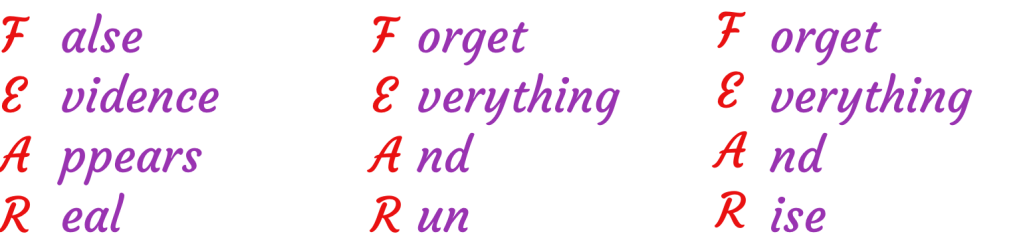
I have come to realize and understand how important the words we say to our self are. The words we say stick in our brains and further allow us to beat ourself up. Words have more power than we understand and are so very powerful to our minds. Some words just by their very nature are judgmental. When we use negative judgmental words on ourself we are immediately telling ourself we did something “bad”. For anyone who grew up being constantly criticized we know this all too well. Some of use grew up hearing on a regular basis that we are stupid, ugly, too thin, too fat, cubby, crazy, everything is our fault, we should have, etc., etc., etc. These words become deeply embedded in our mind and very powerful. Thus we are sure that there is truth to what we heard over and over, even if we are not aware of the message. Until we realize that the words we have heard repeatedly that those words are NOT true, we live our lives as though they are a reality. This is actually called cognitive distortion. Let’s take the power out of those words.
Every time we use the word ‘should’ we are actually making a judgment about ourself and unfortunately for most of us, that judgement falls on the negative side of things. Especially when we fail to be able to follow through in the manner we think we ‘should’. I found, for me, the simple act of changing the word ‘should’ to the word ‘could’ removes a lot of the judgements I make about me. Instead of saying to myself “I should have done it this way”, I try to check myself and change it to “I could have done it this way”. This removes the negative judgement that I didn’t live up to my own expectations and instead shows my mind that I had and still do have options. And next time I could do it another way.
Take the word ‘control’. This word by its very meaning to our minds means we have some influence as to what or who we are dealing with. This is not always true. We cannot control other people, their words or their actions. When we fail to be able to do what our mind tells us what we should (there’s that word ‘should’ again) be able to do, that we can force the situation to be what we want, we then use that thought as a reason the beat ourselves up. The simple fact is we have no influence on other people or situations. Changing the word ‘control’ to ‘manage’ helps us to realize we can manage the person or situation by how we react to it.
By challenging the words we use, we can take the power out of all the negative thoughts we use on ourself. This is not an easy thing to do. It takes time along with many trials and errors. My suggestion is to make a list of words that contain negative judgements against ourself. Next put another word(s) next to it that is a kinder, gentler word(s) or phrase we could use in its place. If you are unable to think of a new word(s) ask your support team, either professional or friends and family, who can come up with ideas. There is a Change My Words template under the template section. Feel free to use it or to just use it as ideas for making your own. Use a spiral notebook to do this is you aren’t feeling creative.
FINAL THOUGHTS:
I know and believe that those of us who suffer from an ED of any type can beat it. It is hard work and at times feels impossible; but I am sure it is a goal that is obtainable to all of you out there.
KEEP YOUR CHIN UP! Take baby steps towards your recovery, put one foot in front of the other and know, with a capital K, you CAN do it. Even if you can’t see it now, the world needs you!